


그만큼 raw materials for mops test play a crucial role in determining the performance, durability, and cleaning efficiency of mops. Understanding the properties of these materials is essential for manufacturers to develop mops that provide optimal cleaning performance while maintaining user comfort and minimizing wear and tear. Testing the raw materials used in mop production ensures that they meet industry standards and consumer expectations for quality and performance.
Industrial Mop Assembly: The Foundation of Quality Mops
그만큼 산업용 모프 조립 is a critical component of the mop manufacturing process. It involves assembling various materials, including mop heads, handles, and cleaning cloths, to create a functional and durable cleaning tool. Each component is selected based on its specific material properties, such as absorbency, durability, and ease of use.
The materials used in the mop assembly directly affect its cleaning effectiveness. For example, mop heads made from high-quality microfiber or cotton are highly effective at trapping dirt and moisture, while ergonomic handles ensure user comfort during cleaning tasks. The assembly process requires careful attention to detail to ensure the final product performs well across various cleaning scenarios.
Wet Mop Materials: Key Considerations
Wet mops are designed for effective cleaning of floors and surfaces, and the materials used in their construction must meet specific criteria for performance and durability. Common wet mop materials include:
- 마이크로파이버: Known for its excellent absorbency and ability to trap dirt and dust, microfiber mops are commonly used in both residential and industrial settings.
- 면: Cotton mop heads are known for their durability and high absorbency, making them ideal for heavy-duty cleaning tasks.
- Blended Fibers: A combination of natural and synthetic fibers, blended mop heads offer a balance of absorbency and durability.
The choice of material depends on the intended application, cleaning efficiency, and cost-effectiveness. For example, microfiber is ideal for cleaning sensitive surfaces without causing scratches, while cotton mops are better suited for larger surface areas where high absorbency is required.
Mop Quality Control: Ensuring Consistent Performance
Mop quality control is essential to ensure that each mop produced meets the required standards for cleaning performance and durability. Quality control processes include testing the materials used, verifying the assembly process, and assessing the final product’s effectiveness in real-world cleaning scenarios.
그만큼 Mop Friction Coefficient (COF) Test is an integral part of quality control. This test measures the frictional resistance between the mop head and the surface it is cleaning, ensuring that the mop provides effective cleaning without causing excessive wear on the floor or surface. The appropriate friction coefficient also contributes to user comfort, ensuring that the mop does not require excessive force to operate.
Mop COF Test: The Role of Friction in Cleaning
그만큼 모프 COF 테스트 is used to measure both the static 그리고 kinetic friction coefficients of mop materials. The static friction coefficient refers to the resistance experienced when the mop is stationary, while the kinetic friction coefficient measures the resistance encountered when the mop is in motion.
- Static Friction Coefficient: This value reflects the resistance to movement when the mop is initially applied to the surface. A high static friction coefficient can make the mop harder to push, leading to user discomfort.
- Kinetic Friction Coefficient: This value reflects the resistance experienced during continuous movement. An optimal kinetic friction coefficient ensures that the mop glides smoothly across surfaces, making cleaning easier and more efficient.
Understanding and optimizing both static and kinetic friction coefficients are crucial for producing high-quality mops that deliver effective cleaning performance without causing damage to surfaces or unnecessary wear to the mop.
How to Test the Friction Coefficient of Mop Materials
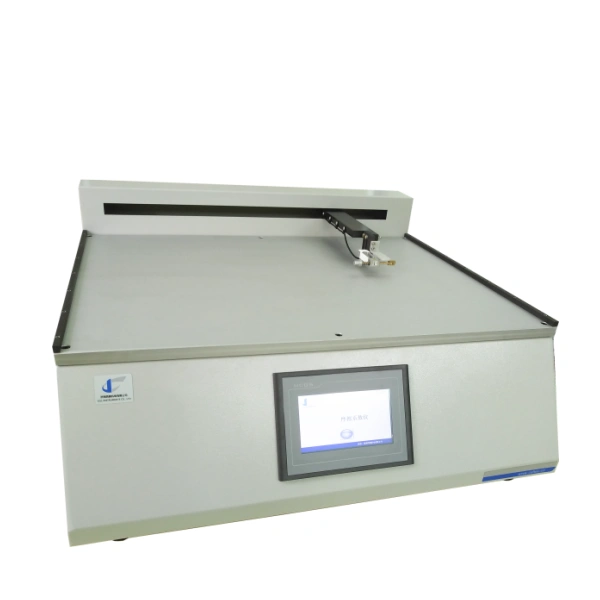
To accurately measure the friction coefficient of mop materials, specialized equipment such as the Mop Friction Coefficient Tester is used. This device simulates real-world cleaning conditions by measuring the frictional forces at various speeds and loads. The tester records both the static and kinetic friction coefficients, allowing manufacturers to evaluate the material’s performance under different conditions.
그만큼 Mop Friction Coefficient Tester helps ensure that mop materials are optimized for cleaning efficiency, durability, and user comfort. The test is critical for determining the best materials for different types of cleaning tasks, from residential floors to industrial environments.
Conclusion: The Importance of Testing Raw Materials for Mops
그만큼 raw materials for mops test are fundamental in producing high-performance cleaning tools. By carefully selecting and testing materials for absorbency, durability, and friction properties, manufacturers can create mops that offer superior cleaning performance and durability. Understanding and optimizing the friction coefficient through tests such as the Mop COF Test is essential for ensuring that mops provide effective and efficient cleaning while minimizing surface wear and user fatigue.
~에 Cell Instruments, we offer advanced testing solutions, such as the Mop Friction Coefficient Tester, to help manufacturers assess the performance of mop materials. Our tools are designed to support quality control and product development, ensuring that your mops meet the highest standards of performance and quality.
 English (UK)
  Azərbaycan dili
  Беларуская мова
  Български
  Čeština
  Dansk
Dansk  ไทย
ไทย  فارسی
فارسی  Ελληνικά
  Eesti
Eesti  हिन्दी
  עִבְרִית
  Suomi
Suomi  Hrvatski
  Magyar
  Հայերեն
  Íslenska
  Bahasa Indonesia
  Italiano
  ქართული
  Bahasa Melayu
  Lietuvių kalba
  Latviešu valoda
  Nederlands
  Polski
  Norsk bokmål
  Slovenčina
  繁體中文
繁體中文  O‘zbekcha
  Українська
  Српски језик
  Русский
  Svenska
  Türkçe